


Common Misconceptions about Applied Behavior Analysis
Applied Behaviour Analysis or ABA is a type of therapy that comes with several advantages. Unfortunately, several misconceptions have been spreading about it as well, leaving so many people missing out on the potential benefits that it could have provided for them.
For those who have seen the benefits of ABA Therapy in someone they know, we would like to hear your story!
#autismstep #autismsg #childwithautismsg #childrenwithautismsg #kidswithautismsg #autismtherapysg

5 Common Components of Applied Behaviour Analysis for Children with ASD
Applied Behaviour Analysis or ABA is a common therapeutic technique used in behaviour modification, and is proven to be most effective in children in the autism spectrum. There are also specific components that are crucial to any quality ABA program.
To gain a better understanding of ABA, we will discuss the five common components used in ABA sessions. Let’s take a closer look at each of them below.
1. Task analysis
Task analysis is defined by the National Professional Development Center on Autism Spectrum Disorders as “a teaching process that breaks down complex activities into a series of simple steps that students are able to learn more easily.” Behavioural therapists then teach those steps according to the child’s learning capacity until he or she can complete the task without assistance.
Task analysis is also an evidenced-based practice that is frequently used to teach self-help, develop appropriate communication skills, and other adaptive abilities. With positive reinforcement, the child can be trained to continue using these new skills in the future.
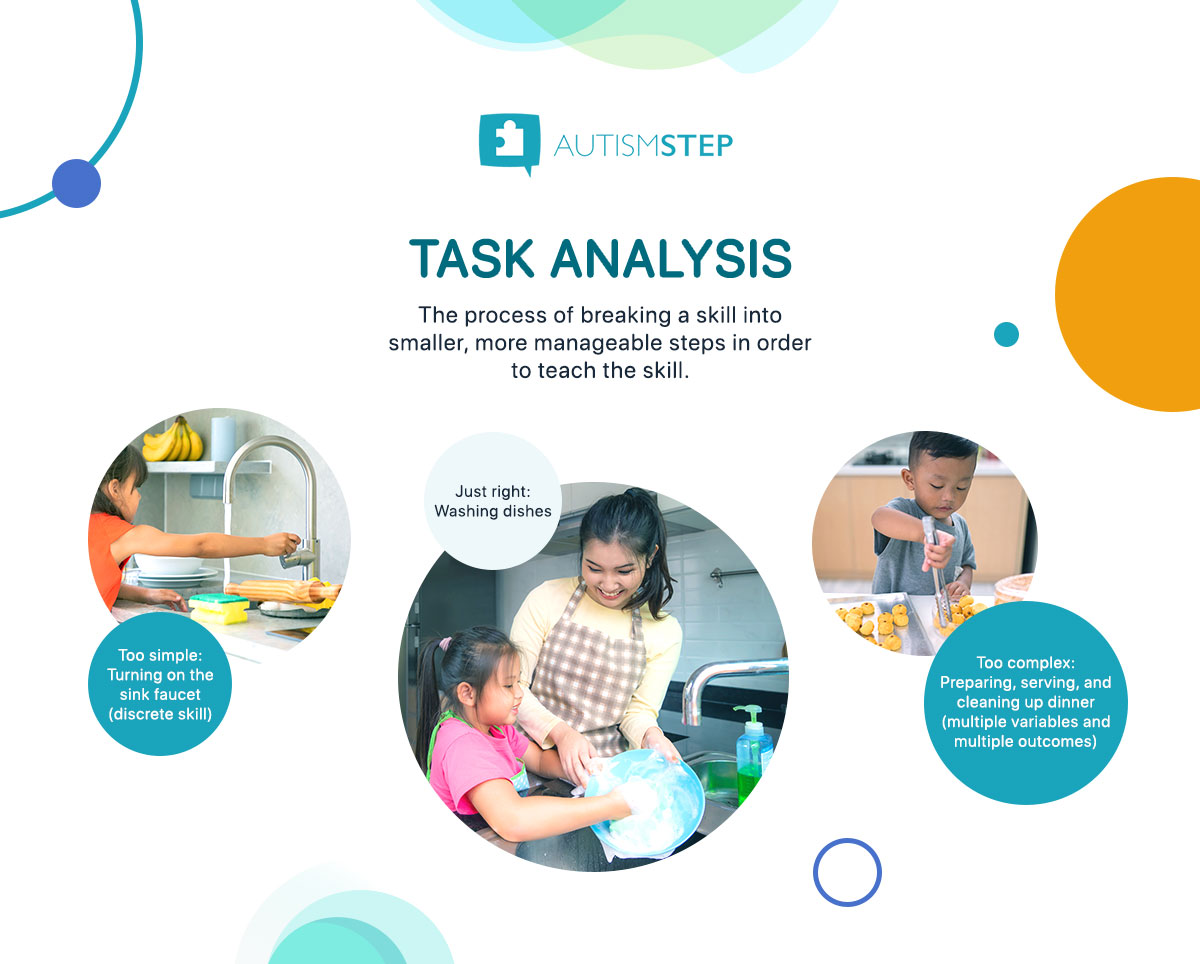
In a TASK ANALYSIS, behavioural therapists select the appropriate teaching method and customise it based on the child’s:
- temperament
- learning style
- history of what has and has not worked
- Individual Education Plan (IEP)/Individual Family Service Plan (IFSP)
- and environments within which he or she functions
2. Chaining
It can get frustrating for parents and the children themselves to foster positive behaviours in children with autism. Chaining is one tool that can help build a successful outcome.
Chaining involves small steps that must be taken sequentially to complete a task which allows ease of understanding and learning. For example, when teaching a child how to brush his teeth, he must take the toothpaste from the cabinet, open the lid, squeeze it onto his brush and so forth.
According to some behavioural therapists, chains are like recipes. People who would have no concept of baking bread rely on recipes to show them the step-by-step process. In the same way, children with autism learn to complete basic tasks which is more beneficial for them because the process is broken down into parts.
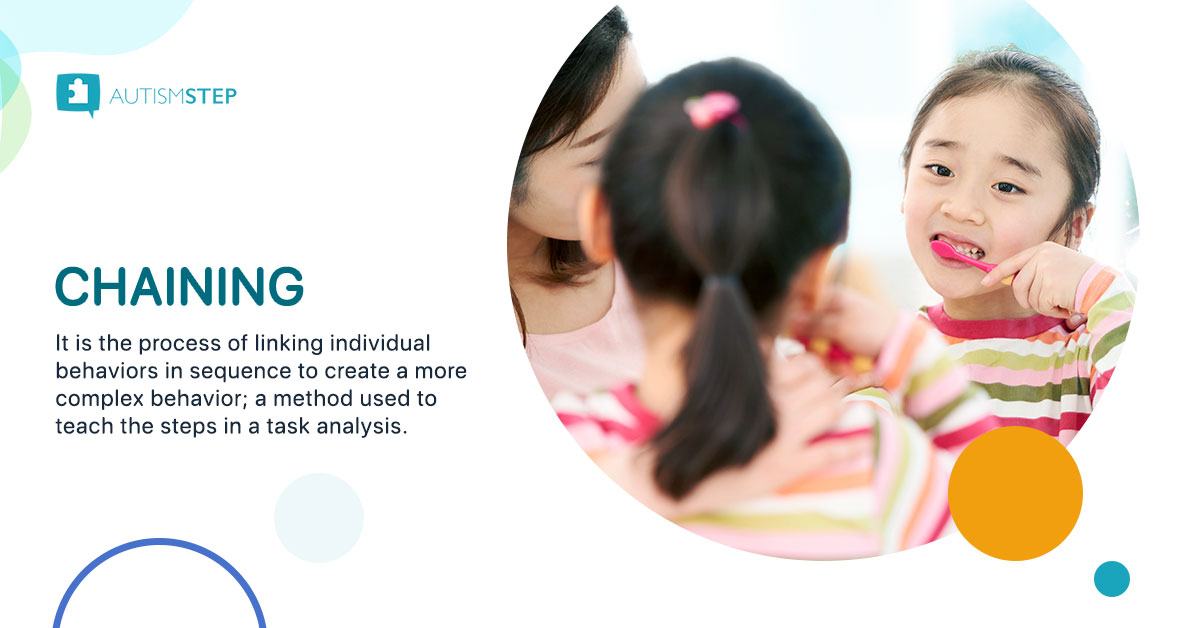
Task analysis and chaining can be combined. Before chaining, a task analysis must be done first to determine what behaviours should be associated with each other. During your child’s sessions, the behavioural therapist will determine which method of chaining works best based on his or her characteristics. The goal is to foster independence as the child completes the entire chain.
3. Prompting
Prompts are instructions, demonstrations, gestures, or other things that will serve as a nudge or a reminder that will increase the likelihood that a child will make a correct response. This approach can help avoid frustrations and meltdowns during the learning process.
Without prompting, a child with ASD may get frustrated in the process of fulfilling certain tasks while undergoing ABA therapy. Frustration can trigger negative behaviours to return which can lead to setbacks. Basically, this approach relies on reinforcing correct responses that are prompted.

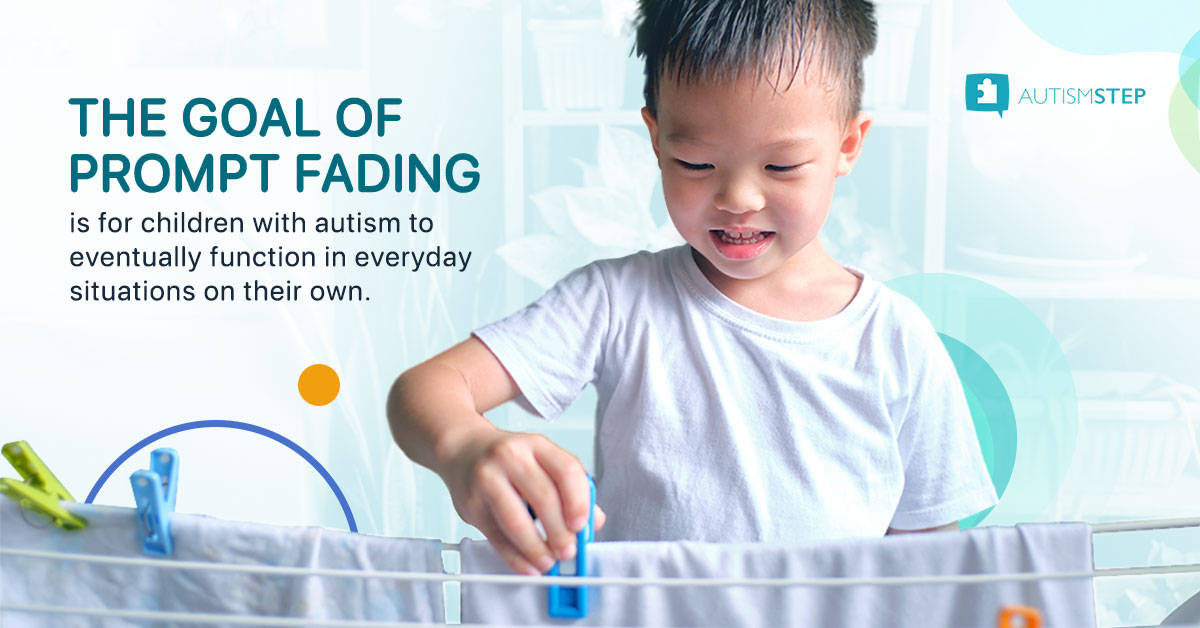
4. Prompt Fading
A lot of kids with autism tend to be prompt-dependent. But it’s not the child’s fault as prompt dependency can stem from well-meaning adults who are trying to help the child gain skills, but have not faded these prompts quick enough.
Ultimately, you want your child to feel secure in completing skills on their own. Therefore, prompt fading is an essential component of ABA Therapy because it weans the child from being too dependent on prompting to complete a desired task. This is systematically done until your child can perform new skills on his or her own.
5. Rewarding
Even for adults, small changes are easier to make than large ones. The same is true for children in the autism spectrum. To help them overcome that struggle, rewarding is a form of positive reinforcement where attempts to complete a skill is encouraged until the child can perform the action or skill independently.
However, the child must be able to display the improvement consistently for the reward to be given. Some examples of rewards can be a Hi-5, verbal praises, a treat, tickles, playing bubbles, etc. The chosen reward will be based on what motivates the child.
The child’s usual performance would not receive positive acknowledgement, instead the therapist will highlight regular improvement. The reason for it is that positive reinforcement strategically encourages the individual to work towards mastering a skill.
These components are essential so that ABA Therapy can foster its intended effect. A successful program will help increase the skill levels of the child to the extent that the program is no longer required for them to function in a typical setting. For one-on-one sessions in the comfort of your own home, you can get in touch with us, here.
Read more about ABA Therapy:
6 Common Autism Treatment Options Available in Singapore
Parenting A Child with Autism
We understand that as much as autism is a struggle for kids who are on the autism spectrum, it is just as challenging for parents to manage.
It’s true that it takes a village to raise a child, and we want to be part of that journey. Remember that you are not alone. The right help is available.
Tag a friend who needs this reminder today.💙
#autismstep #autismsg #childwithautismsg #childrenwithautismsg #kidswithautismsg #autismtherapysg

A Home Program Designed for A Child with Autism
AutismSTEP offers a Home Program to help your child progress in a familiar environment.
In-Home ABA Therapy offers the following benefits:
💙 Address common problems in a domestic setting (e.g. outbursts at bedtime, refusal to participate in meals, trouble with daily tasks and so on).
💙 Promotes the involvement of parents.
💙 The familiar environment reduces the time it takes to adjust.
Read more about our Home Program here – https://www.autismstep.com/home-program/, or you may call us directly at +65 6456 9950.
#autismstep #autismsg #childwithautismsg #childrenwithautismsg #kidswithautismsg #autismtherapysg

Red Flags for Language Delay
Are you concerned that your child is not displaying any progress in the way they communicate? Here are some red flags you need to keep an eye out for. 🚩
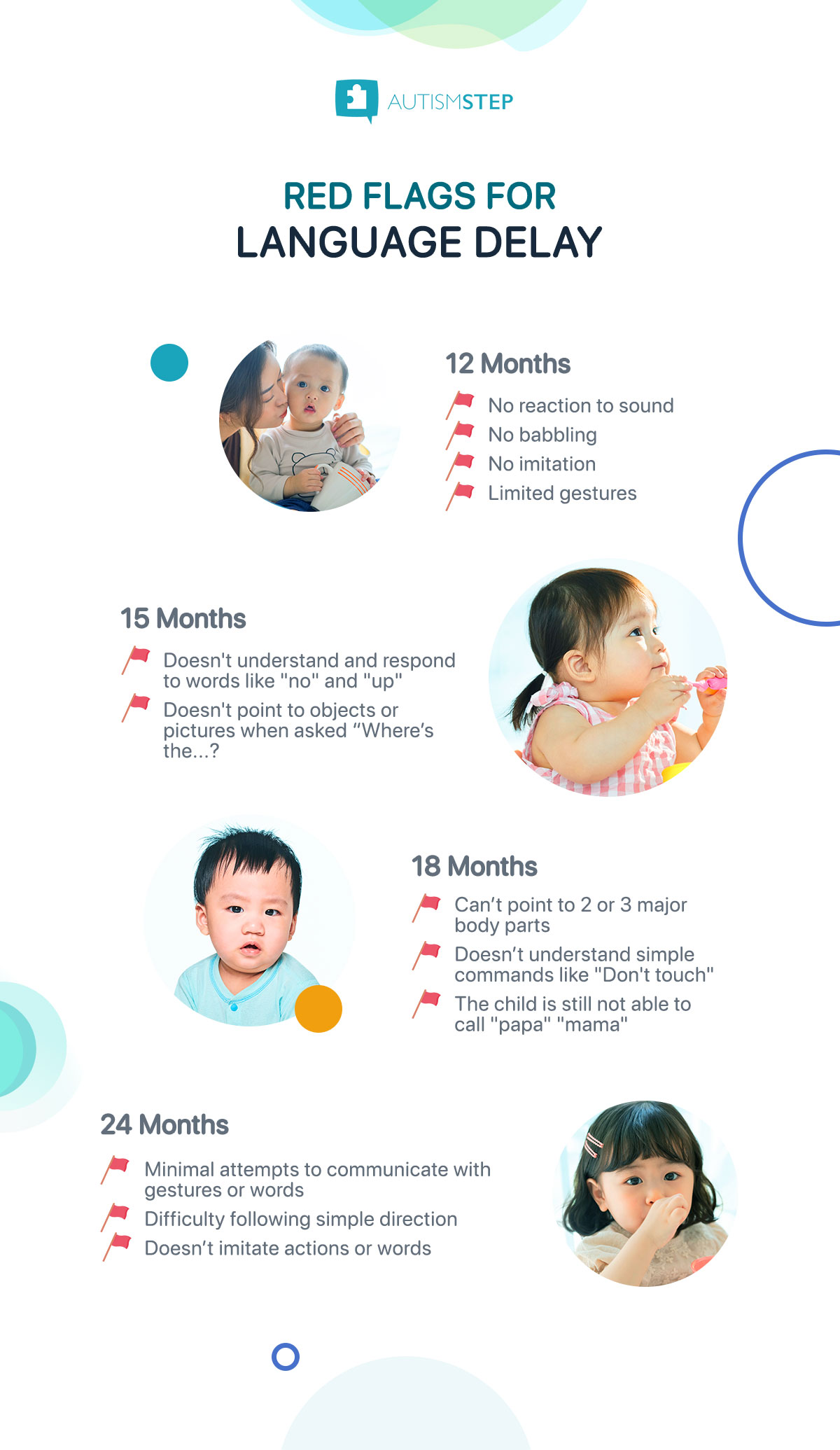
ABA is the scientifically-validated therapy that helps children on the spectrum work through areas of severe developmental delay, like language and nonverbal communication by breaking down tasks into small, achievable steps with positive reinforcement at each stage.👶👧
Tag a friend who needs to read this today.
#autismstep #autismsg #childwithautismsg #childrenwithautismsg #kidswithautismsg #autismtherapysg
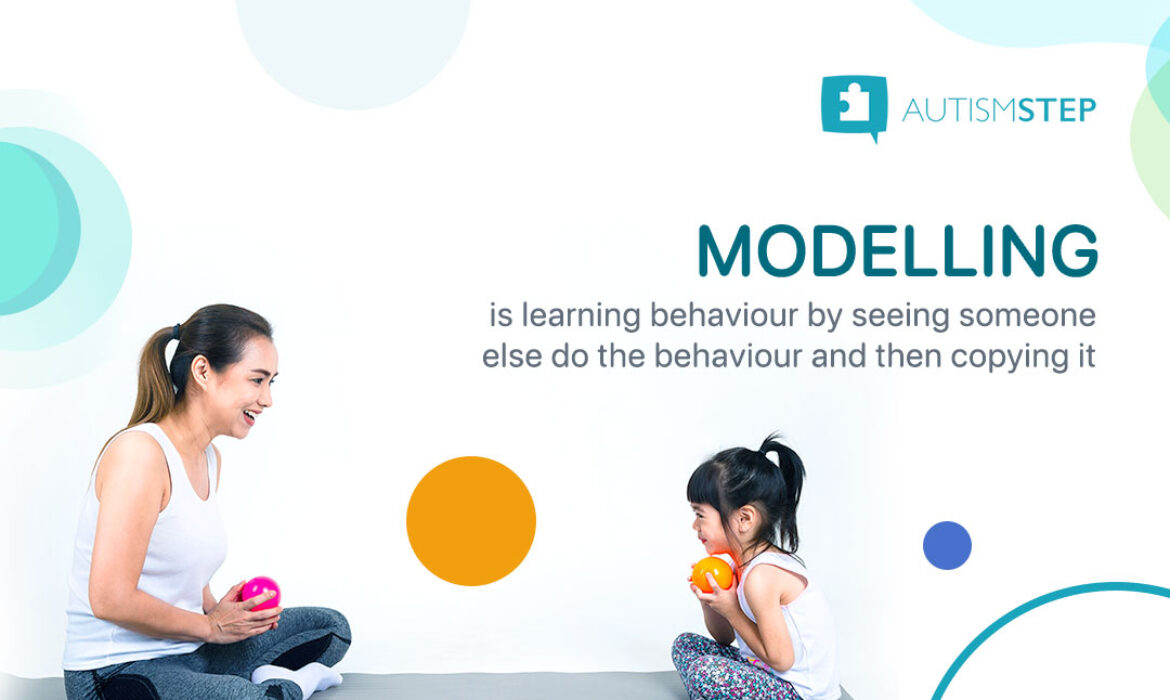
Modelling: How Does It Work for Children With Autism?
Modelling is a useful intervention for teaching a variety of skills to children with autism who have well-developed imitation skills. It is a well-established teaching method that can be delivered by an actual person in front of the learner via filmed video that demonstrates how they should behave.👍
Modelling has been used to eliminate unwanted behaviours, reduce excessive fears, facilitate learning of social behaviours, and many more. It can help strengthen or weaken previously learned behaviours.
There are other well-researched techniques in ABA therapy to help your child who struggle with the developmental setbacks that come with ASD. We can discuss them with you in more detail by calling +65 6456 9950 or sending us your message here 📨 https://www.autismstep.com/contact/
#autismstep #autismsg #childwithautismsg #childrenwithautismsg #kidswithautismsg #autismtherapysg #modelling

Some autistic people report poor quality of life, but many do not
Autistic people vary widely in their quality of life, a new study shows. Some report shortcomings in their physical health and school achievement, among other areas, but many do not.
To help autistic people improve their well-being and satisfaction with life, researchers need a better understanding of what matters to individuals, says lead researcher Eva Loth, senior lecturer in forensic and neurodevelopmental sciences at King’s College London in the United Kingdom.
“It’s really important to consider each person and their circumstances individually, understand what aspect of quality of life is affected, why, and then decide with them what may be the most useful support,” Loth says.
Autistic people often report having a lower quality of life than non-autistic people do, a trend driven in part by social isolation and a diminished belief in their own capabilities, according to a study published earlier this year. They are also more likely to have anxiety or depression, which can impact a person’s ability to function in society and achieve life goals.
The new work suggests that anxiety and depression, not autism traits, explain why many autistic people score lower than non-autistic people across various measures of quality of life. It also shows that this gap closes for some autistic adults and children within specific areas, including physical health, leisure activities and school achievement.
Despite overall differences between the two groups, “individual quality-of-life outcomes vary, with some individuals clearly doing well,” says Judith Miller, senior scientist and training director at the Center for Autism Research at the Children’s Hospital of Philadelphia in Pennsylvania, who was not involved in the work. “We know we have a lot to learn about autistic individuals who are struggling. This paper shows we also have a lot to learn from autistic individuals who are doing well.”
Compounding factors:
Loth and her team analyzed survey data from 344 people with autism and 229 without autism who are part of a larger long-term European study. Adults completed a 26-item questionnaire about their physical health, psychological health, social relationships and opportunities for leisure activities. For children and teenagers in the study, parents completed a 45-item questionnaire that assesses physical and psychological comfort, risk avoidance, academic achievement and the availability of an adult to talk to about problems.
In every area, autistic people reported worse outcomes than non-autistic people, the study found. Two key areas showed the most dramatic group differences: Autistic adults reported higher levels of physical pain than non-autistic adults, and autistic children and teenagers lagged most behind their non-autistic peers in school achievement.
These differences did not reflect every autistic participant’s experience, though. On an individual level, almost half of the autistic adults reported levels of psychological health and satisfaction with friendships on par with those of non-autistic adults, and about 55 percent of autistic adults reported having similar opportunities for leisure activities as non-autistic adults.
For full article, please visit: https://www.spectrumnews.org/news/some-autistic-people-report-poor-quality-of-life-but-many-do-not/
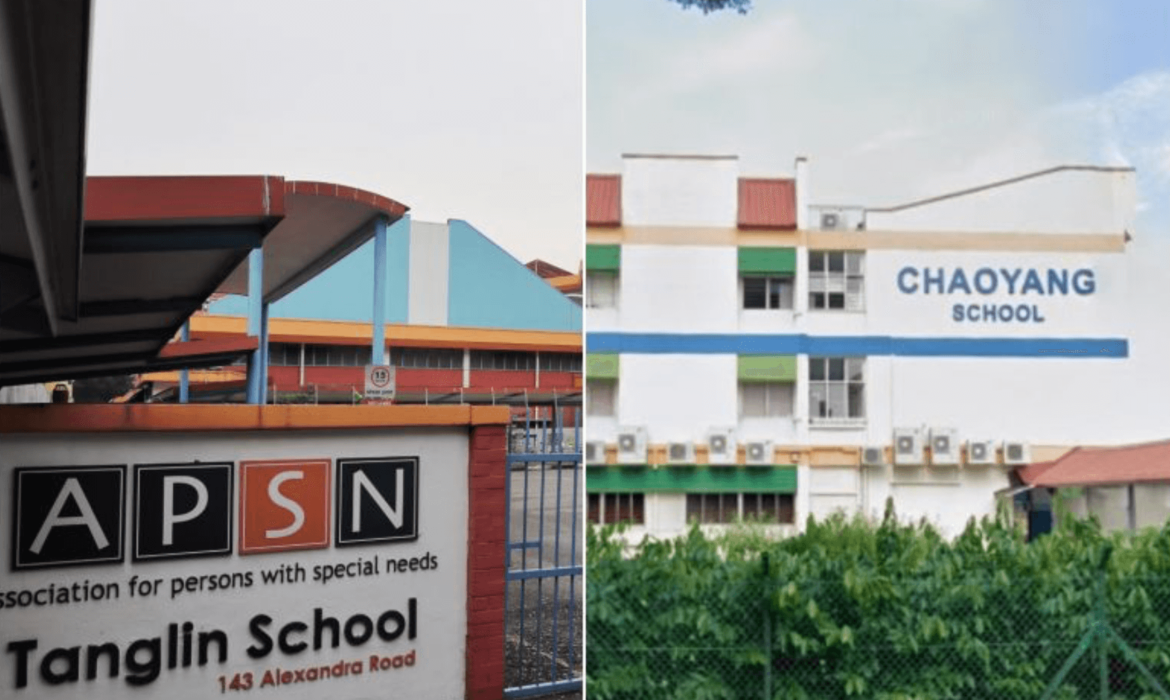
Two special education schools to be redeveloped and located at new joint campus in 2025 – AutismSTEP
SINGAPORE – Two special education schools serving students with mild intellectual disability will have a joint campus, and redeveloped to accommodate more students.
Chaoyang School and Tanglin School, which are both run by the Association for Persons with Special Needs, will also have more facilities to cater to students across the autism spectrum.
The special education (Sped) schools will be located at the former Da Qiao Primary School in Ang Mo Kio in 2025. Chaoyang School is currently also located in Ang Mo Kio and Tanglin School is in Bukit Merah.
At the new site, Chaoyang School will provide 400 primary-level places and Tanglin School will have 350 secondary-level places. They currently have 320 and 260 students enrolled respectively.
Minister of State for Education Sun Xueling, who spoke to reporters during a visit to Chaoyang School on Thursday (Nov 5), said the schools hope to provide more places for children with mild intellectual disability who live in the north-Eastern and central regions of Singapore.
Ms Sun, who is also Minister of State for Social and Family Development, said it will be more convenient for families to have both schools located at the same site. It will also give the students a sense of familiarity.
For full article, please visit: https://www.straitstimes.com/singapore/parenting-education/two-special-education-schools-to-be-redeveloped-and-located-at-new
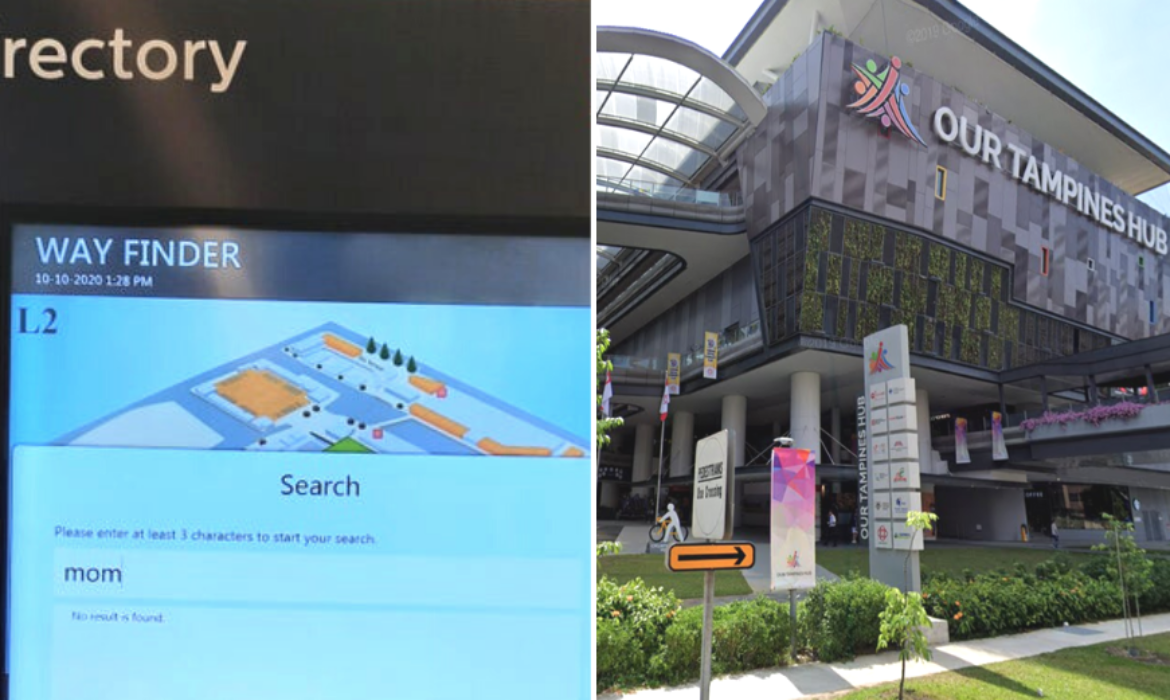
Young kid lost at Our Tampines Hub searched for mother on touchscreen mall directory – AutismSTEP
One lost child at Our Tampines Hub devised a rather creative — and hilarious — way of attempting to find his family.
Tried finding mother on directory
In a story shared on POWER 98 Love Songs’ Facebook page, the person who took the photo revealed that it was a primary school kid around the age of 11 or 12.
The child was looking for his or her parents.
Some kids might wander around, head to the information counter, or perhaps ask other passers-by for help.
This particular child, however, ingeniously decided to search “mom” in the mall’s digital directory.
Naturally, the directory stated that no result is found.
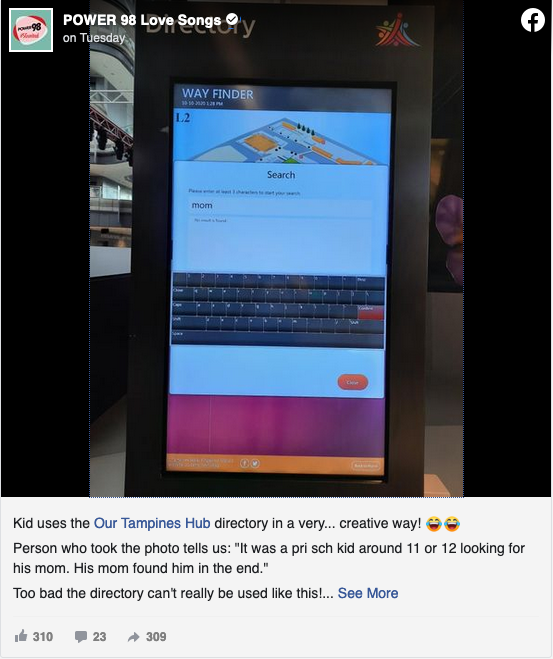
It is uncertain if the person who took the photo decided to help the kid out, or how the kid was reunited with his parents in the end.
For full article, please visit: https://mothership.sg/2020/10/lost-kid-find-mother-directory/

Teachers’ Day Training @ Red SchoolHouse
We are honoured to be invited to Red SchoolHouse for their Teachers’ Training for helping children with special needs in a school setting. The training was conducted in both English and Mandarin. We are grateful for the warm welcome and like to also thank Red SchoolHouse for the gifts of appreciation.


We look forward to conduct more trainings for more preschools. Happy Teachers’ Day!
 AutismSTEP