First Ever Visit from Representative of QABA to Singapore! – AutismSTEP
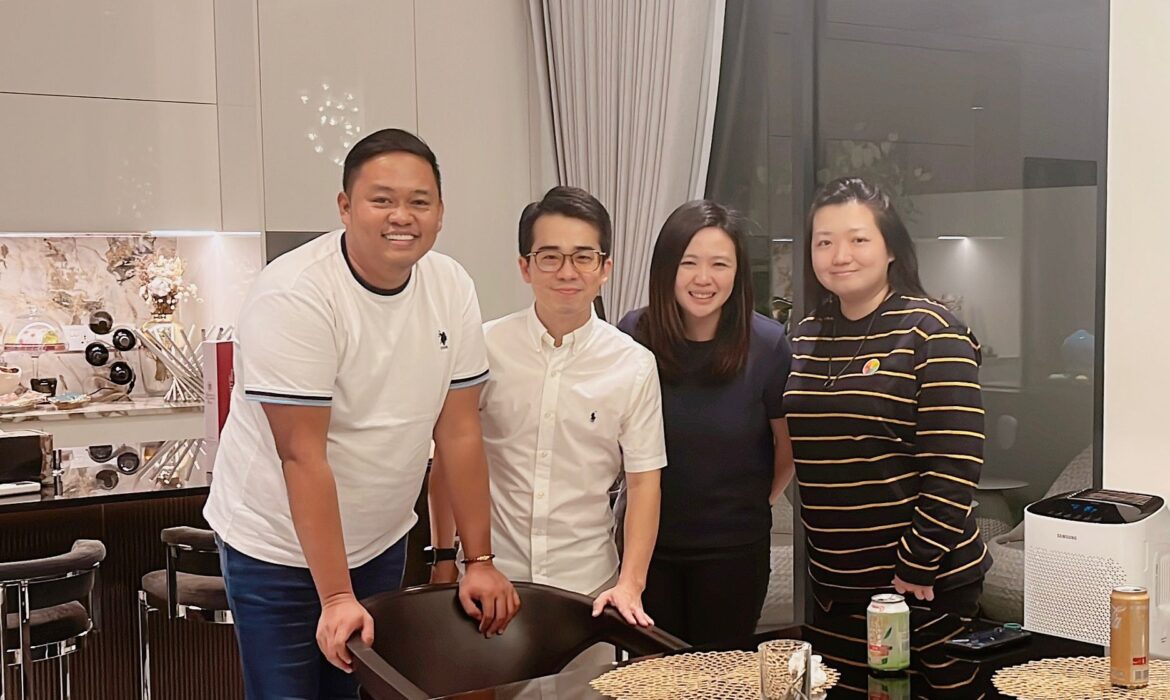
AutismSTEP is honoured to be the first organization in Singapore that the board of QABA has ever visited.
The Qualified Applied Behavior Analysis Credentialing Board (QABA®) is an internationally-accredited credentialing agency dedicated to ensuring the highest standard of care among professionals providing applied behavioral analysis (ABA) services.
AutismSTEP is the only ABA therapy centre in the whole of Singapore to ensures that all our therapists are certified ABA therapist (RBT or ABAT). This is to ensure the standards of our therapists and quality of therapy that we are providing for all the families that we are helping!
#autismfactors #autismSG #autismsingapore #autismsg #ABAtherapy #ABA #autismspecialist #RBT #BCBA #autismassessment #ADHDawareness #ADHDandAutism #autismstep #autismspectrumdisorder #autism #ASD #specialneeds #specialeducation
Skills upgrading, special education among 8 key announcements from MOE’s budget – AutismSTEP
SINGAPORE – A wide range of measures covering skills upgrading, special education and arts appreciation were announced in Parliament on March 4. They were unveiled during the second day of the debate on the Ministry of Education’s (MOE) budget.
For students, parents and teachers:
1. More arts and cultural appreciation opportunities
More students will get to attend live music performances at professional concert venues, with the nationwide roll-out of the Performing Arts-Based Learning scheme for secondary schools, following a successful pilot.
Minister of State for Education Gan Siow Huang said the scheme was trialled in 2023 at 22 secondary schools, allowing students to experience such performances that were specially produced and staged at a professional concert venue.
They also had pre- and post-concert music lessons held in class.
MOE and the National Arts Council partnered key cultural institutions and local performing arts groups to make the scheme possible, added Ms Gan.
The scheme will be progressively rolled out to all secondary schools from 2024 to 2027.
2. More sharing between parent support groups
Almost every school today has a parent support group, which has unique and useful experiences that other groups can learn from, noted Ms Gan.
To encourage sharing of these experiences across groups, every parent support group will be part of a Support Circle from 2024, said Ms Gan.
These circles will be made up of parent support group representatives from around 10 schools.
They can decide on the topics to collaborate on, such as supporting parents of children with special education needs or strengthening student mental well-being.
3. Higher salaries for Sped teachers
Special education (Sped) teachers will receive higher salaries in the next few years, as part of broader moves to raise the quality of education in the sector and strengthen support for students with special needs.
Second Minister for Education Maliki Osman said that between 2024 and 2026, Sped classroom teachers can receive salary increases of up to 12 per cent, while teacher aides can receive increases of up to 15 per cent.
From 2024, starting salaries for Sped classroom teachers and teacher aides will increase by up to 15 per cent and 17 per cent, respectively, he said in Parliament on March 4.
There are currently close to 1,700 Sped teachers and about 800 teacher aides.
4. Lower fees for Sped students
Nine Sped schools are expected to further reduce fees by up to 60 per cent, said Dr Maliki. This comes after six Sped schools with higher fees lowered their fees by at least 25 per cent in 2020.
The latest move means the maximum monthly fees chargeable for Singaporean students will be reduced from $150 to $90, he said.
The nine schools are Awwa School @ Napiri, both Eden School campuses, Pathlight School, Rainbow Centre at Margaret Drive, Yishun Park and Admiral Hill, as well as St Andrew’s Autism School and St Andrew’s Mission School. They serve students with autism spectrum disorder and multiple disabilities.
About 3,500 students will benefit from this shift, which will take effect by mid-2025, said Dr Maliki. There are currently about 8,000 students in 25 Sped schools here.
For full article, please visit: https://www.straitstimes.com/singapore/politics/skills-upgrading-special-education-among-8-key-announcements-from-moe-s-budget
Worried about potential signs of Autism in your child?
Try our FREE pre-assessment online test! –> https://www.autismstep.com/pre-assessment-test/
Get in touch with us to get a FREE in-depth explanation of your results!
Minds launching financial planning modules for caregivers of people with special needs – AutismSTEP
SINGAPORE – Mr and Mrs Choo are in their 70s, but unlike their friends who have grown children supporting them, their only child is intellectually disabled and still requires care.
Mr Choo, who declined to reveal his full name, has discussed his son’s future care with his 35-year-old niece, but is mindful that she may want to start her own family in future.
The couple will get some guidance when a series of six modules on life plans, living arrangements, and support networks and services comes out later in 2024.
The modules are part of Minds’ beefed-up online portal on future care planning options for caregivers, called FutureReady.
Other new modules will cover topics such as insurance, schemes and grants as well as health services and medical screening.
This came after Minds saw an uptick in inquiries from caregivers on making future care arrangements, after the first six FutureReady modules on legal issues, finances, health and accommodation were launched in 2023.
For full article, please visit: https://www.straitstimes.com/…/minds-launching…
Thank you for coming on board with us Hafidz!
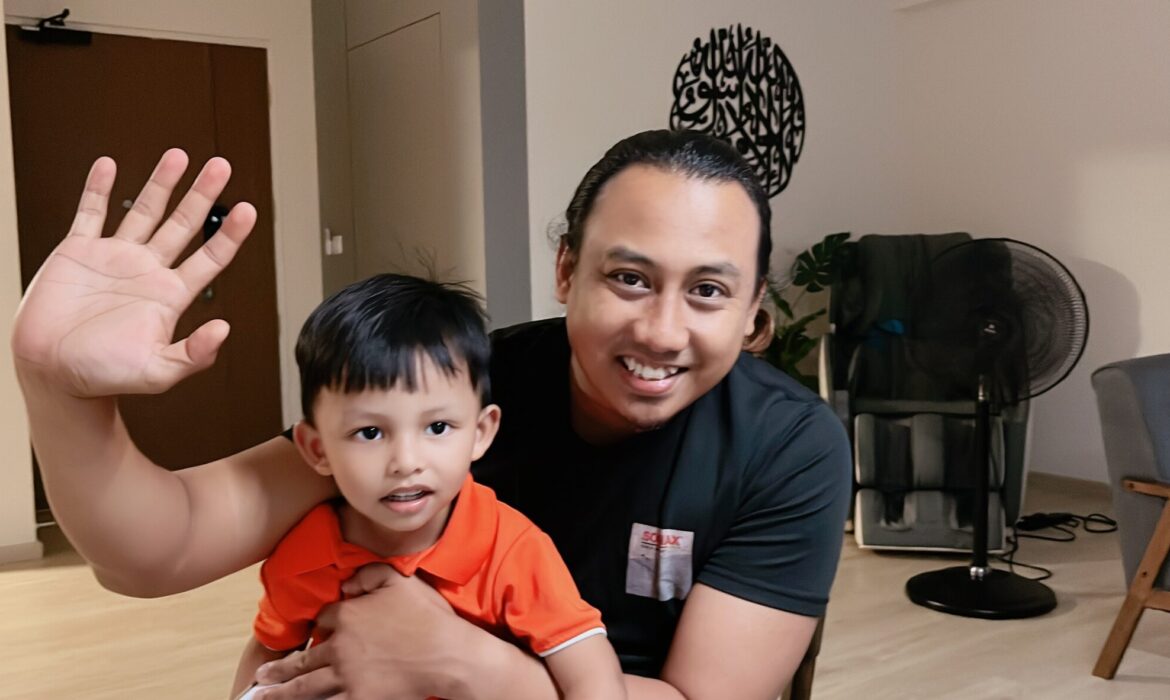
Hafidz’s wife saw us on Facebook and made an enquiry wth us. After speaking to us, they decided to schedule an initial consultation a few days later.
Hafidz’s son is 3 years old and is having speech delay. He also need to improve his attention span and is picky with food. We recommended therapy for his son and they decide to come on board with our programme.
We like to thank Hafidz and his family for their trust in us in giving us a chance to help make a difference in the life of their child.

Budget Singapore 2024: Cheaper pre-school, special needs school fees in enhanced social support efforts
AS PART of its efforts to boost social support, Singapore will make pre-schools more affordable, provide more support to lower-income families, and do more for families of persons with special needs, said Finance Minister Lawrence Wong in his Budget speech on Friday (Feb 16).
To make pre-schools more affordable, Singapore will cut full-day monthly childcare fee caps for government-supported pre-schools in 2025.
Fee caps will be cut by S$40 to S$640 for anchor operators and S$680 for partner operators. These figures are before childcare subsidies are applied.
The government will further reduce fee caps in 2026, with details to be announced later, said Wong, who is also deputy prime minister.
Lower-income families will also receive enhanced pre-school subsidies.
Currently, higher subsidies are given to children with working mothers. They will be extended to all children from lower-income families, including those with non-working mothers.
To support social mobility, Singapore will introduce ComLink+ progress packages for eligible lower-income families with young children. These improvements will focus on supporting and encouraging actions that these families take to improve pre-school education, employment, financial stability and saving for home ownership.
Under the pre-school education package, if families ensure their child is enrolled in pre-school when he or she turns three, they will get a one-off top-up of S$500 to his or her Child Development Account.
Families that ensure their child attends pre-school regularly from ages three to six will receive a top-up of S$200 to the account for every quarter of good attendance.
Under the employment package, families must secure and sustain a job that contributes to Central Provident Fund (CPF) accounts and pays a gross monthly salary of more than S$1,400.
Up to two working adults will receive a combination of cash and CPF payouts amounting to S$450 to S$550, for every three consecutive months of employment. If two adults are working, each will receive S$50 more per quarter.
For full article, please visit: https://www.businesstimes.com.sg/singapore/budget-2024-cheaper-pre-school-special-needs-school-fees-enhanced-social-support-efforts
#autismfactors #autismSG #autismsingapore #autismsg #ABAtherapy #ABA #autismspecialist #RBT #BCBA #autismassessment #ADHD #ADHDandAutism
‘It goes to her savings account’: TikToker responds to criticisms of her using sister with autism in ad – AutismSTEP
Being a caregiver is not easy and sharing the journey and struggles online, takes a lot of courage.
Andreana Tay, a TikToker known for posting autism-related videos, recently received backlash online after she published an Estee Lauder ad featuring her autistic sister in the video.
The sponsored content centred around how 28-year-old Tay, finds time for herself despite working full-time and being a caregiver for her sister, Audrey, who has autism.
Among the nasty comments received was a comment that received 82 likes, which stated: “How are you pulling your sister into an ad?”
In response to these accusations, Tay posted a video on June 25 with the caption: “I literally can be transparent with y’all, whatever we earn from those campaigns goes into Audrey’s account and even pay for her bills at home. She is unable to support herself, so this is another means or way she can be at home earning some money.”
Shocked that there were so many insensitive comments about her ad, she clarified in the video that “the whole campaign itself is talking about everybody’s different story”.
She added: “Yes, I have Kakak (referring to their helper at home) but obviously we need someone to help in the house right? How do you think it’s so easy to be a full-time caregiver at home?”
And as a full-time social media manager, she mentioned that she also needs to focus on her work and build her career so that she is able to help her sister in the future.
Hence, Tay emphasised that whatever sponsorship campaigns that she takes on, such as the Estee Lauder ad, goes into her sister’s savings account.
Frustrated that she is constantly being accused of using her sister to make money, Tay said: “Enough is enough. If you’ve got any better plans or any way to help my sister to earn money, please let me know. I am all ears.”
For full article, please visit: https://www.asiaone.com/…/it-goes-her-savings-account…
RHB Bank illustrates the inner world of an autistic person in heartwarming CNY film
RHB Bank is looking to make neurodiversity and inclusivity the heart of its Chinese New Year campaign this year with a dramatic retelling of autistic rights activist and filmmaker Beatrice Leong’s life.
Created together with RHB Bank’s creative agency FCB Shout, the film, titled Acceptance is shot entirely from a first-person point-of-view to help viewers see through the eyes of Leong and better understand how an autistic person navigates the world around them.
The film begins with a young Leong introducing the audience to her soft toy named Bunny which sports the bank’s blue branding. As Leong realises that Bunny is her sole source of comfort among her family members and schoolmates who view her as an outcast, she decides to pack up her things and run away.
On her journey alone on the streets, she meets Luth, a young boy from The Ark Autism Learning Centre who also carries a soft toy. It is through this encounter that she realises that she may not be so alone after all.
“I thought that no one but Bunny understood me. But the truth is, I didn’t understand myself either,” Leong said in the film. Together with her mother, Leong seeks consultation from a specialist to better understand autism.
In a shocking twist, when the film shows Leong’s mother accepting her by giving her Bunny which she once thought was childish for her to have. The shot then pans to reveal that Leong in real-life directed and narrated the film herself.
“At RHB, we are committed to making progress happen for everyone, and our various diversity, equity and inclusion (‘DEI’) initiatives are testament to this,” said Abdul Sani Abdul Murad, group chief marketing officer of RHB Banking Group.
“This heartfelt and personal film by Beatrice Leong reaffirms our commitment to continue supporting the neurodiverse community and serves as a timely reminder during this festive period to embrace and celebrate one’s true self,” he added.
Leong currently leads an NGO called Autism Inclusiveness Direct Action Group which aims to represent the autistic community in media spaces and policy-making. True enough, the film also features autistic cast members to prove that autistic people do have a place in the world of media and arts, said Leong.
For full article, please visit: https://www.marketing-interactive.com/rhb-bank-acceptance-cny-autism-inclusive
‘Butterfly effect’ may explain some genetic causes of autism
A new study suggests that mutations in regions of the genome that help control gene activity may influence the development of autism.
A “butterfly effect” may help explain how autism-related genes in DNA get switched on. A new study suggests that, through this complex ripple effect, mutations in genes unrelated to autism end up influencing the activity of genes tied to the disorder.
How does this work? DNA contains genetic material called promoters, which essentially switch genes on and off. Because DNA is twisted and coiled in a 3D shape, these promoters can control genes that are located far away from them in the DNA’s sequence. In other words, if you stretched out all the kinks in the DNA, the promoter and genes would be far apart, but introducing folds in the molecule brings them close together. The promoter and the genes it controls form a regulatory “unit” called a topologically associated domain (TAD).
Because of this complex mechanism, someone who doesn’t have mutations in autism-linked genes may still develop the disorder due to mutations elsewhere in their genome — in promoters. That’s the idea explored in the new study, published Friday (Jan. 26) in the journal Cell Genomics.
Autism is highly heritable — it’s estimated that between 40% and 80% of cases are tied to genes passed down through families. However, autism can also be caused by mutations that spontaneously arise in DNA.
Such mutations have recently been discovered in “non-coding” regions of DNA, which comprise about 98.5% of the genome. These regions include promoters and are known as “non-coding” because they don’t contain instructions to build proteins, like genes do.
Until now, little was known about how mutations in non-coding DNA impact someone’s likelihood of having autism spectrum disorder (ASD). The new study begins to address that question.
The study authors analyzed the genomes of more than 5,000 people with autism, along with those of their siblings who didn’t have the condition and acted as a comparison group. The team were specifically looking for the presence of non-heritable mutations. They used specialized techniques to capture the 3D configuration of the genome and define TAD boundaries around autism-linked genes.
The team found a direct association between autism and TAD-related gene regulatory mechanisms — specifically TADs that contain genes known to be linked to autism.
For full article, please visit: https://www.livescience.com/…/butterfly-effect-may…
What Are the Early Signs of Autism Spectrum Disorder?
Autism, now becoming widely recognised, falls under the spectrum disorder umbrella. Individuals find themselves on different sides of the spectrum depending on the severity of the condition. Diagnosing Autism Spectrum Disorder (ASD) remains a challenge, as there are no blood tests available yet; it relies on observable features and assessment. In Singapore, the estimated prevalence is 1 in 150 children are affected by ASD.
Recognising the importance of early detection becomes pivotal, offering a pathway to prompt intervention and support. Timely intervention significantly enhances outcomes for individuals on the autism spectrum. In the early stages, signs of autism initiate a “cascading effect on brain development” during the first two years of life. If not identified early, these indicators can result in significant challenges, including difficulties in social, cognitive, and language skills and challenging behaviours.
Keeping these considerations in mind, let’s dive into detail about what the early signs of Autism Spectrum Disorder look like.

What is one of the earliest signs of autism?
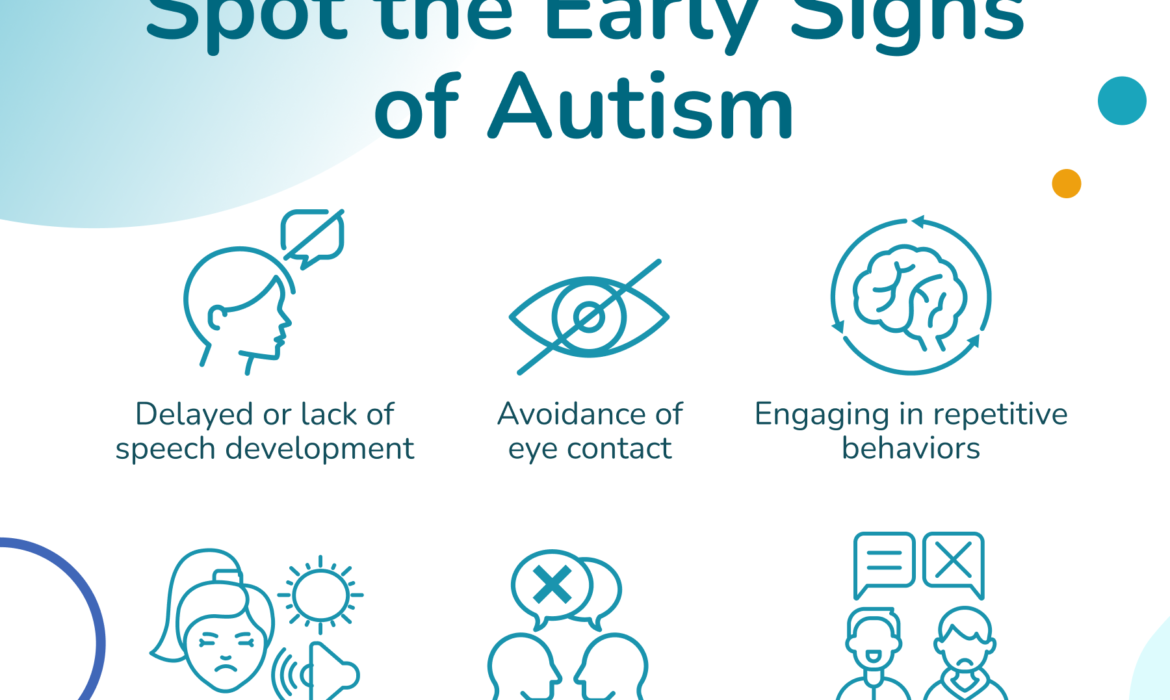
Early indicators of autism often manifest in communication patterns. Children with ASD may exhibit delays in speech development or show a limited interest in verbal engagement. Attending to these early cues can provide valuable insights into a child’s developmental trajectory.
It is also crucial to distinguish between a speech and language delay and a communication delay associated with autism.
A speech delay involves difficulties in pronunciation or sound production. On the other hand, language delays manifest when a child lacks a sufficient vocabulary and resorts to alternative forms of communication, like gestures.
In contrast, children with ASD may experience speech delays alongside challenges in following directions, avoiding eye contact, and exhibiting limited social and play skills. Acknowledging these distinctions is pivotal for tailored support and intervention.
At what age does autism begin?
The onset of autism varies, but signs often become apparent within the first two years of life. Early indicators may emerge as early as 12 to 24 months, prompting the need for vigilant observation during these critical developmental stages. The American Academy of Pediatrics (AAP) recommends that healthcare providers screen all children for ASD during their 18- and 24-month well-child checkups.
What are the 10 early signs of autism?
1. Communication Challenges
In communication development, children with ASD may experience babbling or “parroting” by repeating words without complete understanding or even exhibit delayed speech. They might find it challenging to use gestures, avoid pointing to express needs, and sometimes remain unresponsive to their name but react to other sounds. Interestingly, they may refer to themselves as “you” and others as “I.” Navigating conversations–both starting and continuing–can pose unique challenges.
2. Social Interaction Issues
There are challenges in forming peer connections and a limited interest in shared activities or play. The individual may remain unresponsive to a parent’s smile, avoid looking at objects pointed out by parents, and refrain from bringing objects to show them. Additionally, there might be a lack of appropriate facial expressions, difficulty perceiving others’ thoughts or feelings based on facial expressions, and a limited display of concern for others.
3. Repetitive Behaviours
This involves engaging in repeated movements or routines. These actions, known as self-stimulatory behaviours, can include hand flapping, rocking, head-banging, and persistently repeating specific phrases.
4. Sensory Sensitivities
Individuals on the autism spectrum may have heightened or diminished responses to sensory stimuli. It can manifest in various ways, such as being overly sensitive to certain sounds, lights, textures, or smells. Conversely, some individuals may seek intense sensory experiences, like repeatedly touching or smelling objects.
5. Delayed Milestones
Milestones refer to significant achievements in a child’s development, such as walking, talking, or social interactions, typically within a specific age range. In autism, delays in reaching these developmental milestones may become apparent. It includes delayed speech and language skills, difficulties with motor skills like walking, or challenges in social interactions.
6. Lack of Eye Contact
Children on the autism spectrum might avoid making eye contact or struggle to sustain it during interactions. Typically, by 6 to 8 weeks, babies often begin to make eye contact, which increases as they develop. However, it’s important to note that variations exist, and some children may naturally have more or less eye contact than others.
7. Resistance to Change
Children with ASD like routines, order, and rituals, whereby changing or transitioning from one activity to the next may be hard for them.
8. Limited Expressions of Emotion
There are challenges in expressing and understanding emotions using facial expressions, gestures, and tone of voice, as they are usually monotonous.
9. Difficulty in Play
They have unusual and repetitive play patterns or may lack interest in imaginative play.
10. Unusual Attachment to Objects
This refers to displaying intense attachment to specific objects. They can be obsessed with unusual toys, topics, or activities, such as trains, dinosaurs, numbers, patterns, etc.
What are the symptoms of autism in a newborn baby?
Diagnosing autism in newborns is challenging, as symptoms often become more apparent as the child grows. As mentioned, some early signs may include limited eye contact, difficulty with feeding or sleeping patterns, and delayed responses to stimuli. It is essential to observe these symptoms during the infant’s growing months and inform the doctors for early detection and diagnosis.
What signs of autism can parents observe at ages 1 to 3?
Around 12 months, signs of autism may become more noticeable. The child may not look even if you repeatedly call their name.
At about 18 months, a typical child with delayed speech will point, gesture, or use facial expressions, while children with ASD might not attempt to compensate for the delayed speech.
At 2-3 years of age, a typical child would usually bring a picture or toy to show to their parents and share their joy with them. But a child with ASD may get their parents a toy to open but won’t look at their faces or share in the pleasure of playing together.
Observation is key. If you notice persistent challenges in the areas mentioned, it’s advisable to consult with a healthcare professional. Trust your discernment as a parent and seek guidance if you have concerns.
The Importance of ABA Therapy
The ABA (Applied Behavior Analysis) therapy is a well-researched and impactful approach designed to improve specific behaviours by systematically applying behavioural principles. Recognised for its efficiency in supporting ASD individuals and their families, it addresses various behavioural challenges.
ABA therapy enhances communication, social skills, and adaptive learning while reducing behaviours that may impact overall functioning. This approach, characterised by professionalism, motivation, and positive reinforcements, highlights the transformative potential of ABA therapy in empowering individuals to reach their utmost capability and lead fulfilling lives.
At AutismSTEP, we provide ABA Therapy to meet the individual needs of the children facing these challenges. We craft tailored approaches that enhance communication, social skills, and well-being. We dedicate ourselves to helping your child thrive.
Consulting an Early Intervention Center
Contacting your paediatrician is the first step. They can provide referrals to early intervention centres or specialists. Early intervention services can include speech therapy, occupational therapy, and developmental support tailored to your child’s needs. AutismSTEP would be happy to assist and help you and your child.
Understanding the early signs of autism empowers parents to take proactive steps in supporting their child’s unique developmental journey. By staying informed and seeking professional guidance, parents play a significant role in nurturing an environment that promotes the well-being and growth of children on the autism spectrum.
For insights into the most appropriate therapy for your child and to ensure you’re making the best decision for their future, please reach out and book a consultation or contact us directly at +65 6456 9950.