
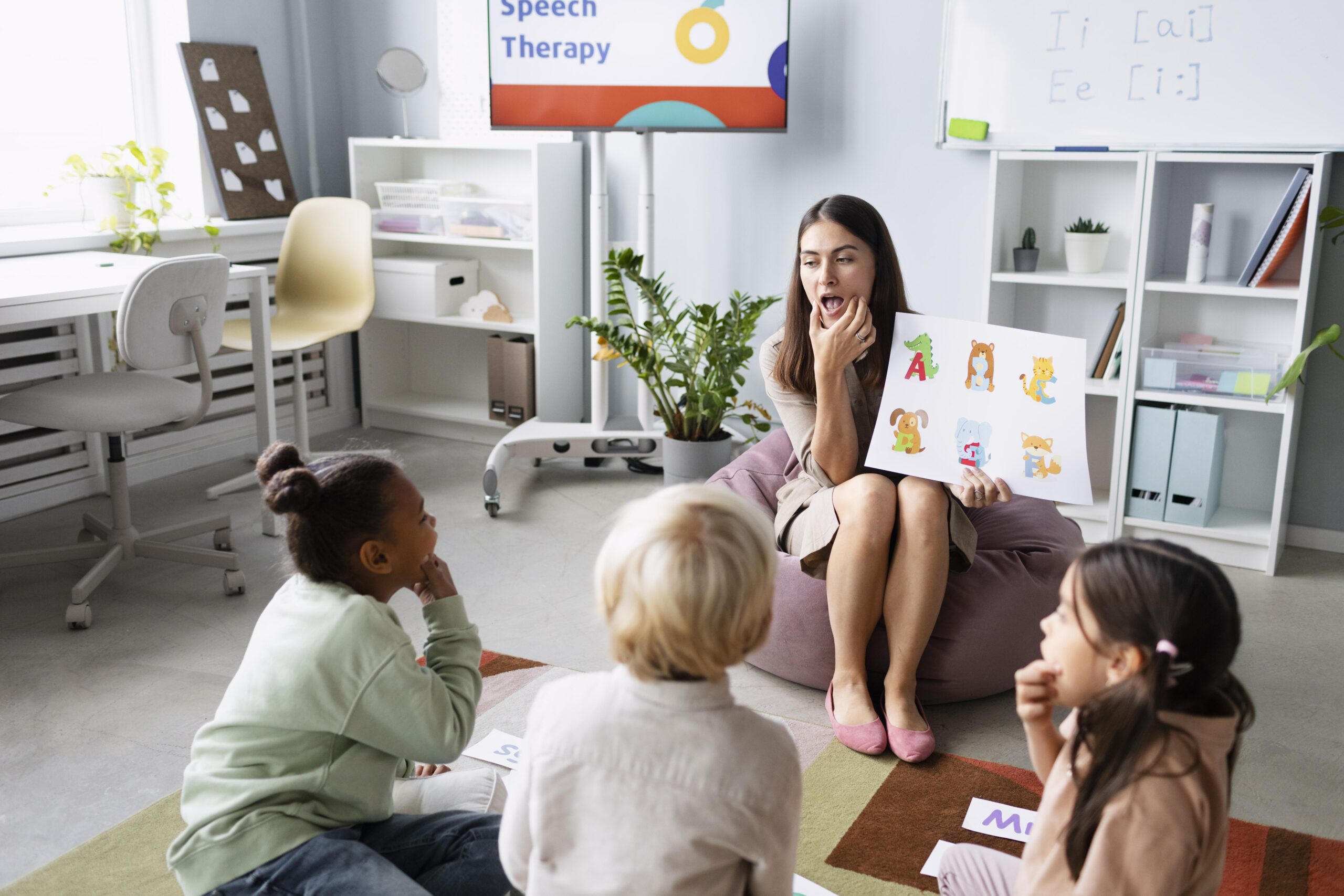
Speech and language development are at the heart of how children connect, express themselves, and make sense of the world. Every new sound, gesture, or word is a small but powerful step toward communication. For children on the autism spectrum, this progress can look different, sometimes slower or unexpected, but always meaningful. Recognising these unique paths helps parents celebrate growth instead of comparing timelines. Tracking autism speech therapy milestones gives families a clearer picture of where their child is now and how to support the next step forward.
At AUTISMSTEP, we understand that every child communicates in their own way and at their own pace. Our team provides personalised speech therapy for autism in Singapore, designed to nurture progress through encouragement, play, and evidence-based strategies.
Building Blocks Of Communication: How Children Learn To Speak And Communicate
Speech is about how we make sounds and form words, while language is about understanding and using those words to share ideas and emotions. Some children may speak clearly but struggle to build sentences, while others understand what’s said to them yet find it difficult to respond. Speech therapists assess both receptive language, which involves understanding, and expressive language, which focuses on using words to communicate. For neurodiverse children, progress may look different, but every small step forward is meaningful and worth celebrating.
Speech Therapy Milestones For Children With Autism: Understanding Progress At Every Age
Every child’s communication journey unfolds in its own unique way. In speech therapy, progress isn’t measured by how quickly a child reaches a milestone, but by how steadily they grow in confidence, understanding, and expression. By looking at how communication typically develops at different ages, parents can better recognise and celebrate their child’s progress. The following guide outlines what speech therapy milestones often look like for children with autism.
Ages 2-3: Building the Foundation for Communication
In the earliest years, communication begins long before words. Babies start by cooing, babbling, and responding to familiar voices. Therapists focus on helping little ones engage through eye contact, imitation, and turn-taking. Early autism speech therapy activities often use play, music, and gestures to build comfort and encourage vocalisation. Even small steps, like responding to their name or pointing to an object, are powerful signs of progress at this stage.
Ages 3–5: Expanding Words and Early Conversations
During the preschool years, children begin to use words more intentionally. They start naming objects, expressing needs, and combining words into short sentences. In speech therapies for autism in Singapore, sessions often focus on strengthening both understanding (receptive language) and expression (expressive language). Therapists introduce games, stories, and sensory activities to help children expand vocabulary and learn how to take turns in conversation. This is also when articulation therapy becomes important, as children learn to form sounds more clearly. Progress may look like improved pronunciation, increased word use, or more consistent engagement with family and peers.
Ages 6–10: Strengthening Language for Learning and Social Growth
As children enter school, speech therapy goals often shift toward supporting learning and social interaction. Children start to understand more complex instructions, describe events, and express ideas or emotions. Therapists help them practice sequencing stories, asking questions, and interpreting nonverbal cues. Bilingual therapy is often valuable for families who use multiple languages at home, helping children grow more confident and skilled in communicating in both languages. Milestones here include clearer speech, stronger storytelling, and better participation in classroom communication and play.
Ages 11 and Above: Refining Social and Academic Communication
Older children and teens continue to develop more advanced communication skills. They begin to understand humour, idioms, and the subtle rules of conversation. Speech therapy at this stage often focuses on pragmatic (social) language, problem-solving, and emotional expression. Teens learn to adapt their speech for different situations, such as talking with teachers, friends, or in interviews. Milestones may include improved confidence in group discussions, more natural back-and-forth conversations, and better self-advocacy.
However, it’s important to remember that autism speech therapy milestones vary widely from one child to another. Some children make quick gains, while others progress gradually over time. The key is consistency, patience, and celebrating each success, no matter how small. At AUTISMSTEP, therapists tailor each plan to match a child’s specific needs and strengths, ensuring that communication becomes not just a skill, but a joyful, empowering experience.
Conclusion:
Every child’s communication journey unfolds in their own time and in their own way. What matters most is not how fast progress happens, but how confidently a child learns to express, connect, and be understood. With the right guidance and consistent support, children on the autism spectrum can make meaningful strides in communication and social interaction. At AUTISMSTEP, our dedicated therapists create personalised speech therapy plans that celebrate every success and nurture steady growth through evidence-based, compassionate care. If you’re looking to support your child’s communication development, contact us today.
 AutismSTEP