

If you’re interested in ABA therapy, it must have crossed your mind how an autism specialist in Singapore can help your child progress through this intervention. It’s a valid concern, especially when you’ll entrust some of the most critical times for your child to develop behavioural, communication, and other adaptive skills.
So for parents seeking clarity about the kind and quality of help their child is getting through ABA, here’s a quick read about the people who will bring these sessions to your home.
What does an autism specialist do?
While many different occupations deal with children with autism, the therapists who focus on applied behavioural analysis (ABA) therapy include Board Certified Behaviour Analysts (BCBA) and Registered Behaviour Technicians (RBT).
Generally, they offer a range of services and support that caters to the unique challenges of a child with autism using the principles of ABA therapy. Sessions can be done in a classroom setting, through private counselling, or in the comforts of home.
A closer look at your ABA Team
How can autism specialists help your child overcome struggles?
Whether working with a child individually or in group settings, these specialists systematically address the limiting symptoms and other related behaviours.
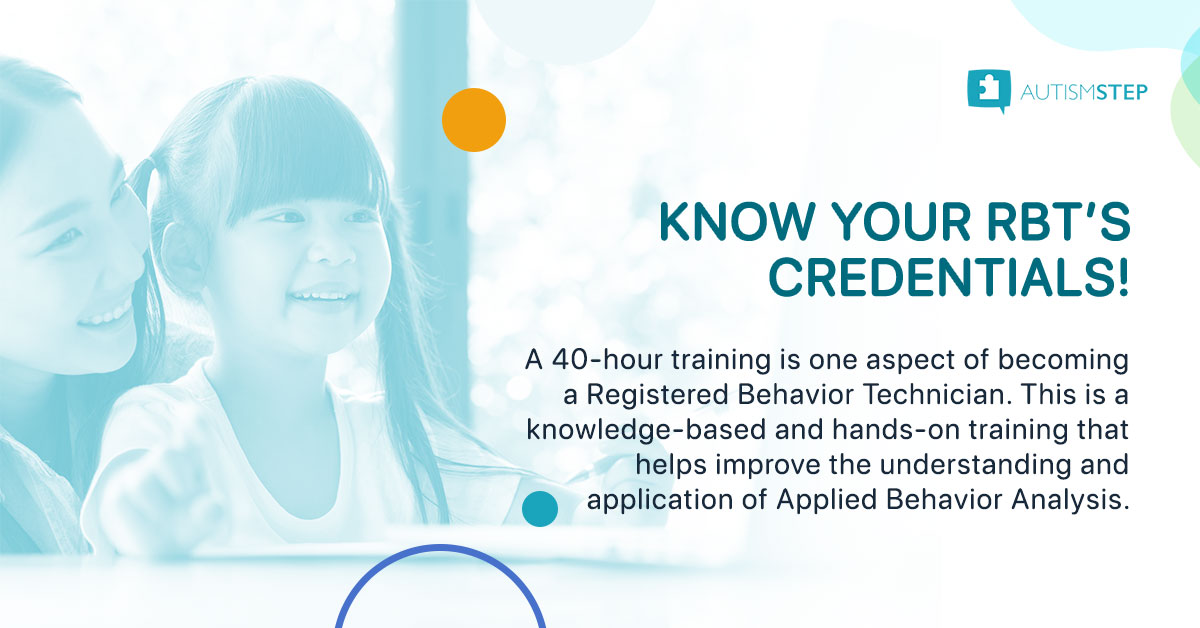
RBTs are the specialists you will see most regularly with your child. During the first few sessions, they will work on building trust and rapport. So if you are doing home-based sessions, you must be comfortable with the behavioural technician being in your private space or working with your child.
Once a bond had been made, the RBT will dive into more intensive exercises to work on the goals and interventions framed by the BCBA. Since there is no ‘one-size-fits-all’ approach in autism support, their interventions must fit your child’s age, strengths, needs or challenges. They will use different strategies to increase skills in social interaction, communication or any area of focus.
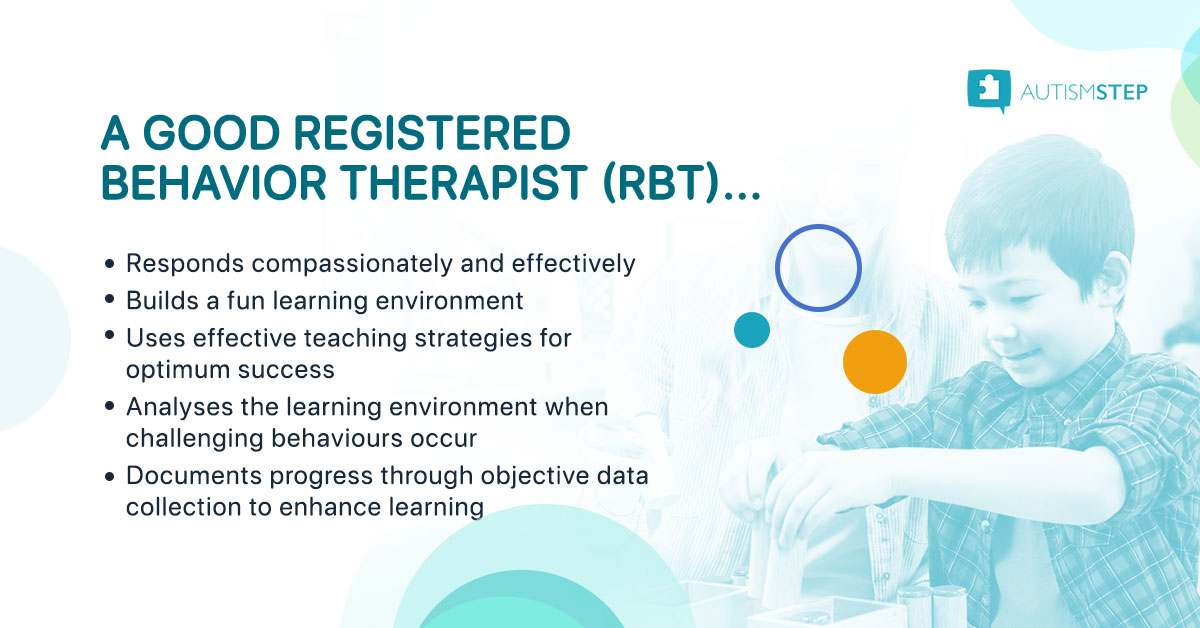
To measure progress, RBTs regularly collect data on each intervention created for your child. This process helps them track progress and point out persistent challenges. Without objective data collection, there is no scientific way for them to show your child’s growth during the program.
The information gathered will also serve as a guide for BCBAs when enhancing and customising their interventions. They will also train the RBT on how and when to implement strategies.
These strategies decrease unwanted behaviours and encourage positive coping mechanisms. However, it won’t be all rainbows and butterflies, but RBTs know how to manage challenging behaviours such as tantrums and physical aggression. Furthermore, they are also equipped with the skills to build a fun learning environment to complement their teaching methods for optimal success.
What are the benefits for parents who seek help from BCBAs and RBTs?
One of the significant gains that parents have is the insights from this journey. During your child’s ABA therapy sessions, it is crucial that you, as a parent, observe and participate in what the RBT is working on with your child. Through this type of involvement, you can learn how to implement the same strategies so you can apply and reinforce what was tackled in each session.
Knowing the same approach makes it possible to have generalisation among all caregivers. When there is consistency across everyone caring for the child, there can be faster progress for your little one.
Furthermore, your involvement can also broaden your understanding and improve your response to behaviours stemming from a child’s struggle with autism. In that way, those difficult moments will be less frustrating and taxing on your end.
Another advantage is that having regular sessions can also provide respite for the family. Caring for a child with autism is no walk in the park and can make you fall behind on self-care. However, these ABA sessions can help you take time for personal care and strengthen other family relationships that also make up the child’s support team.
Why is an RBTs role important to your child’s struggle with autism?
 AutismSTEP