

Key Takeaways
- The best therapist recognises that therapy outcomes depend heavily on the child’s family environment and daily routines.
- Strong autism therapy support in Singapore focuses on collaboration between therapists, families, and educators. Clear and effective therapist-parent communication can guide caregivers to support development outside therapy sessions.
- Successful autism intervention programmes translate therapy goals into practical strategies for real-life situations.
- When families are actively involved, children are more likely to generalise skills across home, school, and social settings.
Why Therapy Outcomes Depend on the Family Environment
When parents search for the best therapist, they often focus on credentials, techniques, or years of experience. These factors matter, but they represent only one part of the bigger picture. What ultimately shapes a child’s development is how consistently new skills are supported in everyday environments.
For autistic children, learning does not occur in isolation. Emotional regulation, communication, and behavioural responses are influenced by daily routines, family interactions, and environmental predictability. If strategies introduced during therapy are not reinforced outside the session, progress may remain limited to the session itself.
This is why effective autism therapy support in Singapore increasingly emphasises family involvement. The ideal therapist understands that meaningful development happens when therapeutic strategies extend into real-life situations such as mealtimes, play, school preparation, and social interactions.
Without this continuity, even well-designed autism intervention programmes may struggle to produce lasting outcomes.
How the Best Therapist Partners With Parents as Active Participants
One defining characteristic of good therapists is how they view the role of parents. Rather than positioning caregivers as passive observers, they treat parents as essential partners in the therapeutic process.
Through clear therapist-parent communication, families gain insight into their child’s behaviour and emotional responses. Parents may learn to recognise patterns such as:
- Situations that trigger anxiety or sensory overload
- Communication attempts that may be subtle or easily overlooked
- Environmental changes that improve emotional regulation
- Language approaches that support clearer understanding
This knowledge helps families respond more effectively during everyday interactions.
For example, parents may learn how predictable routines can reduce uncertainty, or how visual cues and structured transitions can support smoother daily activities. These strategies are often introduced through structured sessions such as autism therapy in Singapore, where therapists demonstrate techniques and guide caregivers in applying them consistently.
A therapist does not simply deliver instructions. They ensure parents understand the reasoning behind each strategy so that families can adapt them naturally in different situations.
Translating Therapy Into Everyday Routines
A common challenge in developmental therapy is ensuring that newly learned skills transfer beyond the therapy environment. Therapists address this by embedding therapy goals into daily routines that families already experience.
Instead of focusing only on clinical exercises, effective autism intervention may address practical scenarios such as:
- Morning preparation and school transitions
- Managing frustration during homework
- Taking turns during play
- Navigating unfamiliar social situations
By working through these real-life examples, therapy becomes more relevant and sustainable.
Parents are often guided to practise strategies gradually, reinforcing them through everyday activities. For instance, a therapist may demonstrate communication strategies during sessions and then encourage families to reinforce them at home.
Approaches such as ABA therapy in Singapore frequently incorporate structured parent guidance to help families maintain consistency across environments. When therapy strategies are applied both during sessions and within the home, children have more opportunities to practise and strengthen their skills.
Building Consistency Across Home, School, and Therapy
For children to develop confidence and independence, they benefit from consistent expectations across different environments. The best therapist recognises that therapy cannot exist separately from school and home life.
In many cases, therapists collaborate with families to align strategies across multiple settings. This might involve:
- Sharing communication strategies that teachers can reinforce
- Identifying sensory supports that improve classroom participation
- Adjusting behavioural strategies so they remain consistent at home
Such coordination is a key component of autism therapy support, where therapy services increasingly recognise the importance of multi-environment learning.
Communication development also plays a major role in this process. Services such as speech therapy for kids may work alongside behavioural or developmental programmes to support clearer expression, social interaction, and comprehension.
When professionals and families collaborate effectively, children encounter similar cues and expectations across environments. This consistency strengthens learning and reduces confusion.
Supporting Family Well-Being, Not Just Child Progress
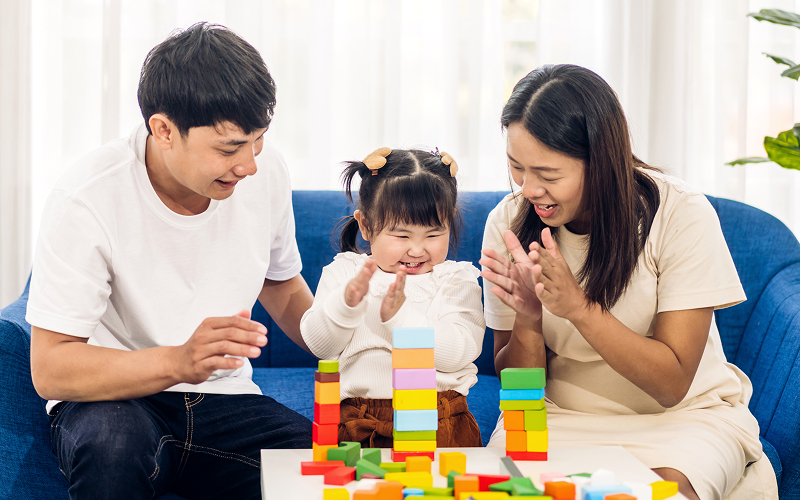
Autism does not affect only the child. It influences the emotional landscape of the entire family.
Parents often navigate uncertainty, evolving expectations, and the daily demands of supporting their child’s development. Even in supportive households, this journey can bring moments of stress or fatigue.
The best therapists understand that parental well-being is closely connected to a child’s sense of stability and emotional regulation. When caregivers feel supported and confident, they are better able to create calm, predictable environments that help children thrive.
For this reason, autism intervention increasingly includes guidance that supports the family unit. Therapists may help parents:
- Develop realistic expectations for developmental progress
- Understand behavioural patterns without blame or frustration
- Identify strategies that reduce stress during challenging situations
This holistic perspective is a hallmark of effective autism support, where therapy aims not only to improve specific skills but also to strengthen family resilience.
At the same time, it is important to recognise that no single approach works for every child. Some families may benefit more from behavioural frameworks, while others may respond better to developmental or communication-focused strategies. The best therapist adapts methods to suit each child and family rather than relying on a single model.
A Family-Centred Approach to Autism Support
At AutismSTEP, therapy is designed to support both the child and the family environment in which development takes place.
Our approach focuses on collaboration, clear communication, and practical guidance that parents can apply in everyday routines. Through structured sessions, ongoing discussions, and tailored strategies, families gain the tools needed to support their child’s progress beyond the therapy room.
By integrating family participation into therapy, we aim to ensure that progress extends into real life rather than remaining confined to weekly sessions.
Contact us if you are looking for therapists who understand that meaningful development involves both the child and the family. Our team is here to provide thoughtful guidance and evidence-informed support throughout the journey.
 AutismSTEP